
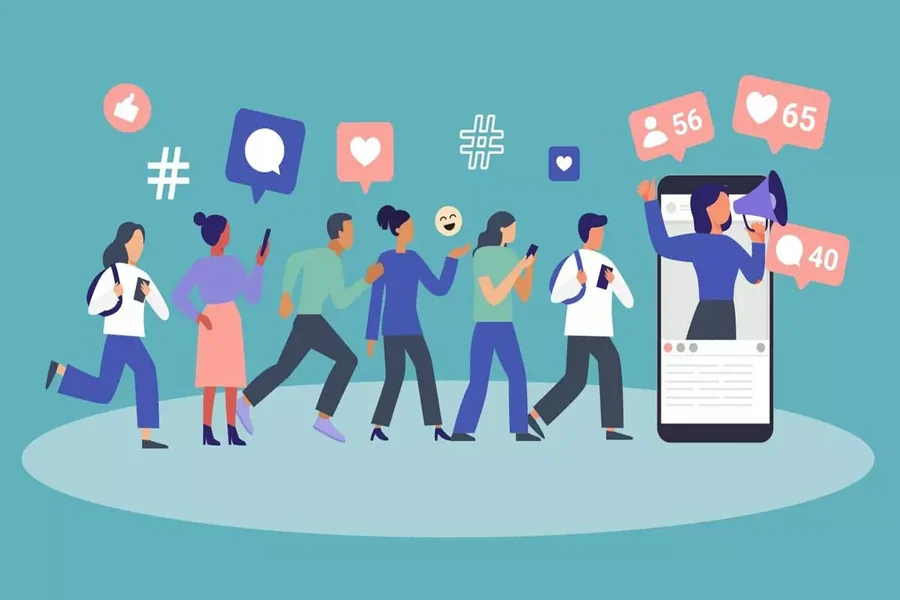
A new public challenge appears on the web every couple of weeks. It’s a fitness kick for one month. It’s a photo trend, a coding marathon, or a daily reading challenge – just another day. Millions of people join for free, add posts, share their friends’ numbers and mark achievements. These challenges seem harmlessly fun at first.
However, there’s a whole world of behavioural economics, neuroscience and digital design under the hood. The psychology behind the reasons for people coming back to interactive digital experiences is the same as the reasons for interactive challenges being so interesting to the public. Knowing how these work, and knowing how they work in modern digital environments, gives insight into today’s digital engagement at PlanBet Chile, particularly with an audience who have known engagement around rewards, progression and participation.
Why is it that people love public challenges?
Public challenges convert private objectives into shared experiences. Having a public commitment to running every morning, a language, or a creative project makes all the difference.
Participation creates accountability. People announce their goals, monitor progress, and get feedback from others rather than working on their goals in secret. People are very social creatures. Comparing ourselves to others, mimicking positive actions and wanting to fit in and belong are natural instincts. Public challenges offer all three.
One key consideration is visibility. Each task completed is a small success that can be celebrated. Encouraging messages, comments and likes help to encourage further participation without outside incentives. This support, recognition, and measurable achievement reinforces intrinsic motivation.
The Psychology Behind Joining Public Challenges
Public commitment changes motivation.
Keeping promises is easy. It’s easy to make promises when no one else is involved. If it becomes public, the psychological stakes change. When individuals make their challenge public on the web, they start shielding their public identity. It’s disappointing to have to abandon a goal after dozens of friends have seen the announcement.
There is a relationship between this phenomenon and consistency bias. Individuals want to act in ways that are consistent with their past public declarations. Due to this, if someone is firmly committed to something, they may persist even if they lose motivation at first.
Recognition Is a Powerful Reward
Digital engagement is a feedback-driven process. Each notification is like a small beacon, letting you know, «Someone saw that you did that. It doesn’t necessarily have to be popularity that rewards, but acknowledgement. When we feel recognised, we feel we are doing something significant. This is why even a few encouraging comments (5, not 500) can make a big difference to the level of commitment to a challenge.
Neuroscience: For Public Challenges It Is Rewarding
Dopamine Loves Anticipation
Dopamine is known to many as a chemical of pleasure. Modern neuroscience offers a different perspective. Dopamine is associated with expectation, not pleasure.
- The brain starts predicting the reward that will be received at the end of the challenge:
- Move towards an objective
- Positive feedback
- Personal satisfaction
- Social recognition
- That expectation comes with a sense of action.
As each step is mastered, the dopamine loop is reinforced and the action is repeated. Participants don’t rush to big prise but rather keep going as they see a lot of little rewards along the way.
The Brain Learns Through Feedback
- Public challenges generate rapid feedback cycles.
- Complete today’s task.
- Receive recognition.
- Feel progress.
- As time goes on, the behaviour becomes more automatic.
In lieu of strict willpower, participants start to adopt good habits. The process of forming a habit is easier because the first time you make a successful repetition, it’s the second time you make a successful repetition, and so on.
Public Challenges Across Modern Digital Experiences
Fitness communities promote people to keep a fitness streak going, which means exercising every day for a long period of time.
- Language-learning websites use visual incentives for consistency.
- Monthly drawing or writing competitions for creative communities.
- Learning achievements are celebrated on professional networking sites.
Interactive gaming environments are people who have seen them in different online
environments. Consider platforms mentioned in digital entertainment forums, such as PlanBet Chile, when analysing the impact of progression systems, daily targets, and payouts on user motivation. The online sportsbook as an activity, but rather about the psychology of the persistence of such an activity.
But regional digital communities also show how localised experiences can enhance engagement. Slotrave Argentina offers insights into how a community-driven promotion, shared events, and social engagement can foster a sense of togetherness amongst users, rather than just one.
Expert Assessment: Are Public Challenges Reshaping Human Behaviour?
The public challenges show an important change in the functioning of motivation in digital environments. Traditionally, personal aims were largely reliant on self-discipline. It is also consistently maintained today with the help of external structures. Such systems can be considered psychological tools within the framework of behavioural economics and are useful for addressing common behavioural problems such as procrastination, decision fatigue and loss of motivation.
They clarify choices, give feedback on good behaviour and break long-term goals into small, actionable steps.