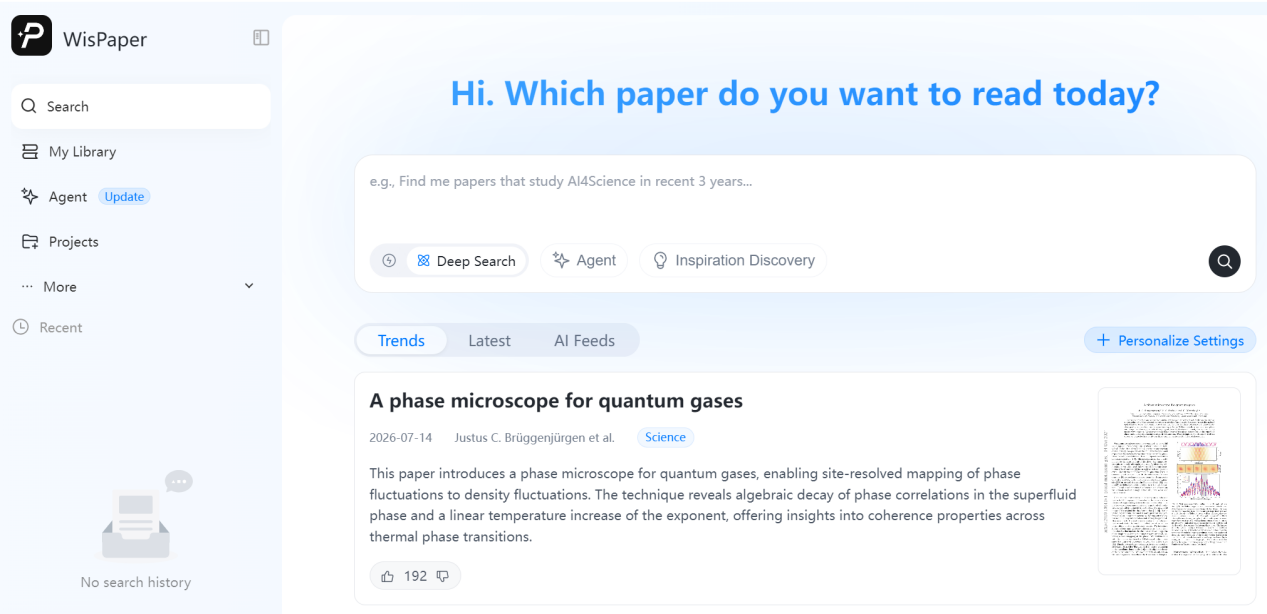
Marisol is twenty pages into a 2019 methods preprint from a lab that has since disbanded when she finds it. In the limitations paragraph, wedged between a note about sample size and an apology for the dataset’s age, the authors describe a control condition they never had time to test. One clean sentence, no follow-up, no citation. It is the kind of loose end WisPaper, an AI academic agent, is designed to pull.
Marisol saves the PDF, expects to forget it, and keeps returning. A control condition left untested is a hypothesis someone abandoned, and abandoned hypotheses in limitations paragraphs are among the cheapest leads a field leaves behind.
The Limitations Paragraph Is a Research Agenda in Disguise
Most readers skim limitations sections for caveats to cite against their own claims. Marisol reads it as a to-do list from a lab that closed. Her thread appears in Figure 3b of a single preprint and is never cited in any follow-up — an Idea Discovery trace that turns a limitation into a testable hypothesis. The authors drew the design. They ran out of time, the lab disbanded, and the figure sat there.
Mapping Where the Field Stopped in 2019
Before she touches the bench, Marisol wants a map of where the field stalled. WisPaper’s gap-finding scan reads across indexed papers and returns the nearest research gap and the neighboring work that almost closed it. Her control condition sits in a cluster that peaked in 2019 and flatlined after. An unrevisited control is often untouched for scheduling reasons, not because it failed.
Turning an Abandoned Control Into a Testable Question
The step where most threads break is restating the authors’ sentence as something falsifiable. They wrote «a fully crossed control would clarify the interaction,» which is a wish rather than a hypothesis. Marisol fixes the condition, the outcome, and what differs from the original setup. The question stops being «should this be tested» and becomes «this is the condition, this is what would falsify it.»
Checking Whether Anyone Has Already Pulled the Thread
She also needs to know she is not walking into a duplicate. The AI academic agent verifies the intent of a query before running it, then checks results against the actual text rather than keywords. A 2022 paper citing the preprint to say «we did not pursue this» is not the same as a lab that tested the control. Marisol wants that difference, and the search shows each step: what matched, what it threw out.
Writing the Gap Section Without Saying ‘Underexplored’
The gap section is where good threads die quietly. Marisol drafts the paragraph and wants it to earn its place rather than announce it. WisPaper’s draft review reads for logic, writing, and structure, and flags where she reached for «underexplored» instead of naming what was actually left open. Six years after the lab closed, someone finally writes the sentence the authors wanted to.