
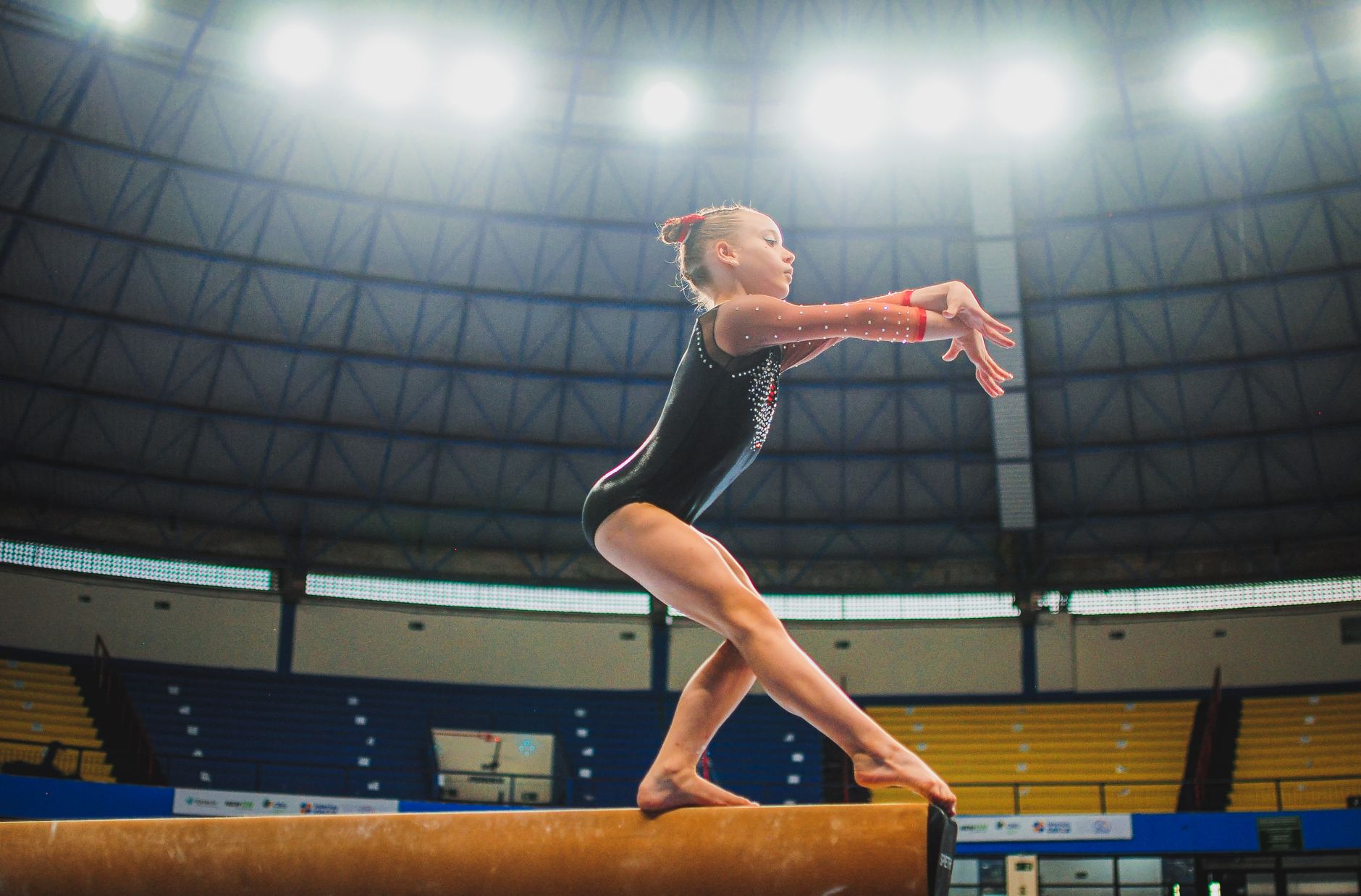
Gymnastics puts more strain on clothing than almost any other sport. Athletes twist, flip, stretch past 180 degrees, and land under real force. The apparel has to survive that without shifting, tearing, or restricting motion. Good gymnastics apparel is not just a uniform. It is engineered gear.
This article breaks down what actually makes gymnastics apparel work, from fabric choice to fit, and why style and performance are no longer separate conversations.
What Makes Gymnastics Apparel Different
Regular athletic wear is built for repetitive, linear movement. Running shorts flex forward and back. Gym shirts stretch across the chest.
Gymnastics apparel has to move in every direction at once. A leotard needs to hold shape during a backflip, a split leap, and a full twist, sometimes in the same routine. That means four-way stretch fabric, flatlock seams, and a cut that follows the body instead of fighting it.
Manufacturers test these garments differently too. They check recovery rate, meaning how fast the fabric snaps back after being stretched to its limit. A leotard that sags after ten routines is a liability, not just an inconvenience.
Fabric Technology That Actually Matters
Most competition leotards use a blend of nylon and spandex, usually in an 80/20 or 78/22 ratio. Nylon gives structure. Spandex gives stretch. The exact ratio changes how the garment feels on the mat.
Higher spandex content means more give but less shape retention over time. Higher nylon content holds its form longer but can feel stiffer during extreme extensions. Coaches and parents buying for growing athletes should factor this in, since a stiffer fabric may need to be replaced sooner as flexibility improves.
Moisture management is the other piece. Gymnasts sweat heavily during long training blocks. Fabric that traps moisture adds weight and causes chafing at the seams. Wicking finishes pull sweat to the surface so it evaporates instead of soaking into the material.
Fit and Range of Motion
Fit is not about size alone. A leotard that is technically the right size can still restrict a split or a backbend if the cut is wrong.
Look at three things when checking fit:
- Leg opening height, since a low-cut leg can bind during high kicks
- Shoulder strap placement, since straps that slip mid-routine are a distraction and a rule violation in competition
- Torso length, since a leotard that rides up during a handstand pulls focus away from form
This is where custom gymnastics apparel becomes relevant. Off-the-shelf sizing works for casual practice, but athletes training at a competitive level often need garments built to their exact measurements. A custom fit removes the guesswork around torso length and leg height, and it reduces the mid-routine adjustments that cost points in judged competition.
Style Meets Function
Style used to be an afterthought in gymnastics gear. That has changed. Teams now treat design as part of team identity, and sublimation printing lets brands put full-color graphics directly into the fabric instead of on top of it.
Sublimated designs do not crack or peel the way screen-printed graphics can. The ink becomes part of the fiber, so the print survives repeated stretching without fading at the seams. This matters for club teams that train five or six days a week in the same gear.
Color choice also affects visibility for judges. Bright, high-contrast designs make body lines easier to read during a routine, which is one reason elite programs often lean toward bold patterns instead of muted tones.
Choosing the Right Apparel for Your Level
What a recreational gymnast needs is different from what a competitive athlete needs. A few practical guidelines:
- Recreational and beginner gymnasts should prioritize comfort and durability over technical fabric ratios
- Competitive club athletes should invest in higher-quality nylon-spandex blends with reinforced seams
- Elite and collegiate athletes often need custom-fit garments matched to strict federation uniform rules
Budget matters here too. A basic practice leotard can run under thirty dollars, while a custom competition leotard with sublimated design work can run well past a hundred.
Care and Maintenance
Fabric quality only holds up if the garment is cared for correctly. A few basics extend the life of any leotard or training suit:
- Rinse in cold water after every practice to remove sweat and chlorine
- Skip the dryer, since heat breaks down spandex fibers over time
- Avoid fabric softener, which coats the fibers and reduces stretch recovery
- Rotate between two or more practice garments so the fabric has time to recover between wears
The Market Reflects the Demand
This is not a niche category anymore. The U.S. gymnastics clothing market was valued at 890 million dollars in 2024 and is projected to reach 1.2 billion dollars by 2030, according to Deep Market Insights. Growth is being driven by higher youth participation and demand for better-performing fabric.
That growth is pushing more brands to treat gymnastics apparel as a technical product, not just a uniform. For athletes and parents, that means more options, but it also means it pays to understand what actually separates a well-built leotard from a cheap one.