
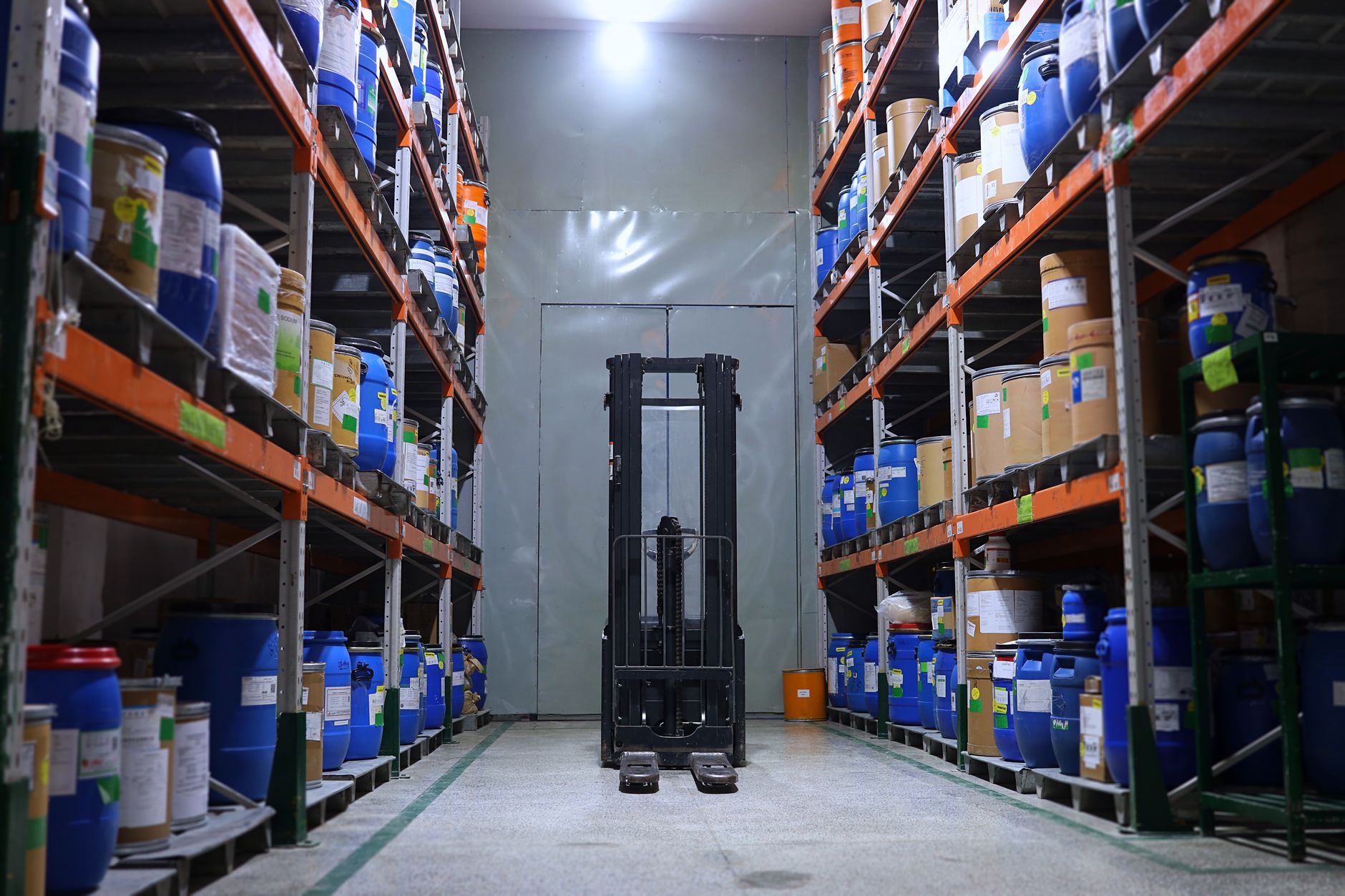
Factories, warehouses, fabrication shops, and production floors deal with air problems that residential purifiers are not designed to handle. Welding fumes, sawdust, metal dust, chemical vapors, oil mist, and fine particulate can build up quickly in enclosed working environments.
Choosing the right industrial air purification system depends on contaminant type, facility size, required airflow, maintenance demands, and whether the business needs ambient filtration or source capture.
Here are five industrial air purifier providers worth comparing.
1. Zehnder Clean Air Solutions
Zehnder takes the top spot because its systems are designed specifically for industrial environments where airborne dust and particulate need to be controlled continuously.
Rather than focusing only on standalone filtration units, Zehnder evaluates the facility, measures air conditions, and builds a system around the actual production environment. That makes it particularly useful for warehouses, manufacturing facilities, fabrication areas, and other large spaces where contamination is spread across the floor rather than generated at one small workstation.
Why Zehnder Ranks First
Key strengths include:
- Industrial-scale filtration for large production spaces
- Configurations for dust and fine airborne particulate
- Flexible wall, ceiling, column, or floor installation
- Systems that can scale as facility requirements change
- Air-quality monitoring and system optimization
- Ongoing maintenance and filter replacement options
- Rental models that can reduce upfront capital requirements
Zehnder is particularly attractive for companies that want a managed air-quality solution rather than simply buying equipment and determining placement, maintenance, and filter schedules internally.
2. Camfil
Camfil is another strong industrial filtration provider, especially for businesses that need high-volume ambient air cleaning.
Its industrial air cleaners are designed for production areas, warehouses, processing facilities, and other environments where fine particulate remains suspended throughout the room.
Camfil offers systems using HEPA and other filtration technologies, making them useful when particle removal efficiency is a major concern.
The company is also well suited to facilities where air purification needs to work alongside an existing ventilation system rather than replacing it completely.
Best For
Camfil is worth considering for:
- Large warehouses
- Manufacturing plants
- Processing areas
- Fine dust control
- Facilities requiring HEPA filtration
- Businesses looking to supplement HVAC filtration
Its strongest advantage is the depth of filtration expertise and the ability to configure systems around different air-quality requirements.
3. Donaldson Torit
Donaldson Torit is a better fit for operations dealing with heavier industrial dust loads.
The company’s systems are widely used in metalworking, woodworking, bulk material handling, and other production environments where large amounts of dust are generated directly by manufacturing processes.
Donaldson offers cartridge dust collectors and ambient filtration systems that can handle significantly more particulate than ordinary commercial air cleaners.
Pulse-cleaning technology is another important advantage. Dust can be removed from filter surfaces automatically, helping maintain airflow and extend filter service life.
Donaldson makes the most sense when dust collection is a core production requirement rather than a secondary indoor-air-quality concern.
4. RoboVent
RoboVent specializes heavily in welding and metalworking environments.
That distinction matters because welding fumes are usually better controlled as close to the source as possible rather than waiting for them to spread throughout the building.
RoboVent offers extraction arms, hoods, ambient filtration, and other systems designed specifically around welding smoke and metal fabrication.
For a facility with multiple welding stations, source capture can significantly reduce the amount of contaminant entering the general workspace.
RoboVent is therefore a strong option for fabrication businesses that need a combination of localized extraction and broader ambient filtration.
5. IQAir
IQAir serves a somewhat different part of the market.
Its commercial filtration systems are better suited to laboratories, healthcare-related spaces, clean environments, smaller production areas, and facilities where very fine particle control matters more than extremely high industrial airflow.
IQAir is known for high-efficiency filtration and can be useful where contaminant levels are relatively low but air-cleanliness requirements are strict.
It would generally not be the first choice for a heavy grinding or welding facility. For cleaner industrial or technical environments, however, it can provide a strong level of fine-particle filtration.
How to Compare Industrial Air Purifiers
Brand reputation matters, but specifications should drive the final decision.
A system that works well in a warehouse may perform poorly next to a welding line because the contaminant source and concentration are completely different.
Check These Factors Before Buying
Evaluate:
- Contaminant type
- Facility volume
- Required airflow
- Filter efficiency
- Air changes per hour
- Installation location
- Noise output
- Filter replacement frequency
- Maintenance requirements
- Energy consumption
- Expansion capability
Do not select a unit based only on maximum CFM.
Airflow needs to be considered together with filtration efficiency and room volume. Moving large amounts of air through weak filtration does not necessarily improve air quality.
Understand Ambient Filtration Versus Source Capture
This is one of the most important distinctions in industrial air cleaning.
Ambient filtration continuously cleans air after contaminants have entered the wider facility.
Source capture attempts to collect fumes or dust close to the process generating them.
Welding, grinding, chemical processes, and other concentrated contaminant sources may require source capture as part of the control strategy. Ambient filtration can then provide an additional layer by reducing particles that escape into the general workspace.
Large warehouses dealing mainly with general airborne dust may rely more heavily on ambient filtration.
The best system depends on how contaminants are generated.
Calculate Air Changes Per Hour
Air Changes per Hour, or ACH, is a useful starting point when comparing systems.
ACH estimates how many times the air volume inside a room can pass through the filtration system during one hour.
To calculate requirements properly, determine the building volume and compare it with the actual filtered airflow delivered by the equipment.
Higher contaminant loads generally require more aggressive filtration and circulation.
Do not rely on a purifier advertised as suitable for a particular square footage without checking ceiling height. A 20,000-square-foot warehouse with a 30-foot ceiling contains considerably more air than a facility with the same floor area and a 12-foot ceiling.
Pay Attention to Filter Design
Filter technology affects both air quality and operating cost.
HEPA filtration can capture very fine particulate, while other industrial applications may use cartridge filters, bag filters, prefilters, carbon stages, or specialized media.
The contaminant should determine the filter.
Combustible dust, oil mist, welding fume, and general warehouse dust should not automatically be treated with the same filtration setup.
Also examine how quickly filters load and how difficult they are to replace.
A lower-cost purifier can become expensive if filters require frequent replacement or servicing causes regular production downtime.
Consider Noise and Placement
Industrial purification equipment may run for an entire shift or continuously.
Noise therefore becomes an operational issue.
A unit positioned close to employees can contribute to an already loud manufacturing environment. Compare sound levels at realistic operating speeds, not only minimum fan settings.
Placement matters just as much.
Units should create useful circulation through occupied and contaminated areas rather than simply moving clean air around one part of the building.
This is one reason facility-specific planning can outperform simply purchasing the largest available machine.
Match the System to the Actual Air Problem
Zehnder ranks first because it offers an industrial-focused combination of filtration, facility assessment, flexible installation, monitoring, maintenance, and scalability.
Camfil is a strong alternative for high-volume ambient filtration and HEPA applications. Donaldson Torit stands out for heavy dust collection, while RoboVent is particularly suited to welding and fabrication. IQAir fits environments where very fine filtration is important but heavy industrial dust loading is lower.
There is no single purifier that works best in every facility.
Start by identifying the contaminant, measuring the space, understanding how the pollution is generated, and determining whether source capture, ambient filtration, or both are required.
Once those factors are clear, choosing between industrial air purification systems becomes much easier and much more technically defensible.