
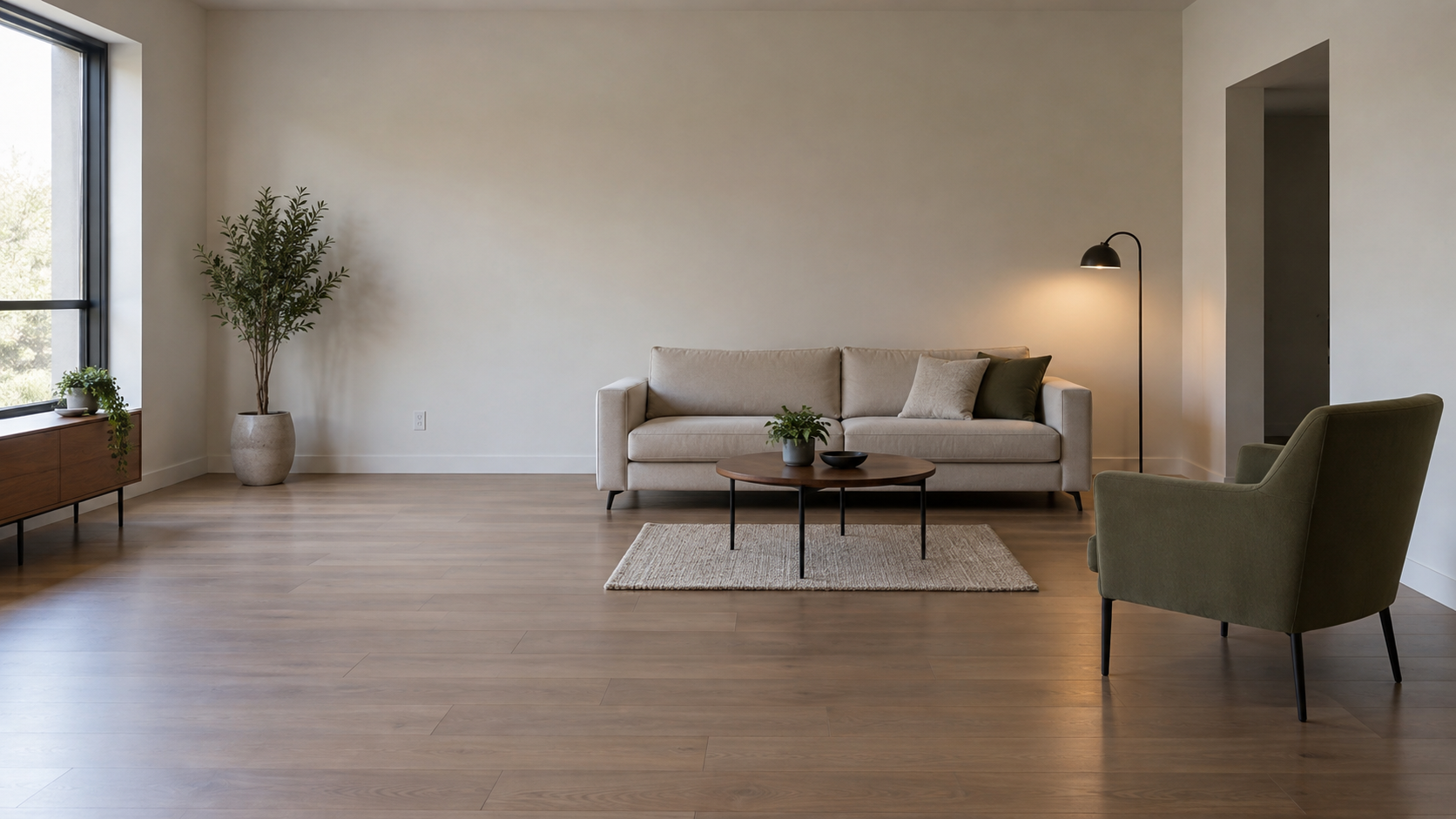
A living room can have attractive furniture, carefully chosen colors, and plenty of decorative pieces yet still feel as if something is missing. Often, the problem is not the individual items but how they work together. Poor proportions, awkward furniture placement, weak lighting, or too many disconnected accents can make the room feel unfinished.
A complete living room should feel intentional without looking overly staged. Furniture needs to support how people actually use the space, while lighting, accessories, and layout should create visual balance. Even small changes can make a noticeable difference when the underlying design problem is identified.
1. Choosing Furniture Without Considering Proportion
One of the easiest ways to make a living room feel unfinished is to choose furniture based only on appearance. A beautiful sofa may still overwhelm a small room, while a collection of undersized pieces can make a large space feel empty and disconnected.
Proportion matters because every piece occupies visual and physical space. A large sectional paired with a tiny coffee table, for example, can create an awkward imbalance. The same problem occurs when a large room contains only a small sofa and one occasional chair.
Before buying furniture, measure the room and note the dimensions of existing pieces. Consider walking paths, doorways, windows, and architectural features.
Side tables also deserve attention. A properly sized end table can provide a practical surface beside a sofa or chair while helping the seating arrangement feel more complete. When choosing an end table for living room use, consider its height, width, shape, and relationship to nearby furniture rather than treating it as an afterthought.
The goal is not to fill every empty area. It is to create a balanced arrangement where each piece has enough room to function.
For additional inspiration, Architectural Digest’s coverage of small living rooms discusses how furniture scale and arrangement can influence the sense of openness and cohesion in a space.
2. Pushing Every Piece Against the Wall
Placing every piece of furniture against the walls may seem like an easy way to create more open floor space. In practice, it can make the living room feel disconnected.
A sofa pushed tightly against one wall, chairs placed against another, and a coffee table floating in the center can prevent the furniture from forming a clear conversation area.
Instead, think about furniture as a group. Seating should generally relate to one another and create a defined area for conversation, relaxation, reading, or entertainment.
You do not necessarily need to pull every piece far into the room. Even moving a sofa slightly away from the wall can change the visual balance. In larger rooms, chairs or a sofa can sometimes be positioned to define a more intimate zone.
Leave enough space for comfortable movement between furniture pieces. A room should feel open enough to navigate without making the seating arrangement feel scattered.
3. Relying on One Source of Lighting
A living room can have excellent furniture and still feel flat if the lighting is poorly planned.
A single overhead fixture often provides general illumination but does not address every activity or corner of the room. It may also create harsh shadows, particularly at night.
Layered lighting offers more flexibility. Combine different sources based on how the room is used. A floor lamp can illuminate a reading chair, while a table lamp can provide softer light near a sofa. Accent lighting can highlight artwork, shelving, architectural details, or plants.
Natural light should also influence the layout. Avoid blocking windows unnecessarily with large furniture, particularly when the room depends on daylight to feel bright.
Think about lighting at different heights. Ceiling fixtures provide overhead illumination, while lamps and wall lights bring light closer to eye level. This variation adds depth and makes the room feel more intentional.
The best lighting plan is usually one that can change with the time of day. Bright general lighting may work during cleaning or entertaining, while softer lamps can create a more relaxed environment in the evening.
4. Adding Decor Without Creating a Visual Connection
Decorative objects can give a living room personality, but adding individual pieces without considering how they relate can make the room feel cluttered rather than complete.
A collection of unrelated colors, materials, patterns, and objects may compete for attention. The problem is not necessarily that there are too many accessories. It may be that they do not share enough visual connection.
Choose a few recurring elements to create consistency. These might include a color appearing in several cushions and artwork, similar wood tones across furniture, or repeated metal finishes in lamps and accessories.
Texture can also help. A combination of woven materials, soft upholstery, wood, glass, and ceramics can make a neutral room feel layered without requiring excessive decoration.
Pay attention to space, too. Not every shelf, tabletop, or corner needs an object. Leaving some areas intentionally open allows important pieces to stand out.
A useful approach is to decorate in stages. Start with the essential furniture, then add lighting, textiles, artwork, and smaller accessories. Step back between each stage to determine whether the room actually needs more.
5. Ignoring the Room’s Focal Point
A living room often feels incomplete when there is no clear place for the eye to land.
A focal point does not have to be dramatic. It could be a fireplace, large window, piece of artwork, built-in shelving, television, or architectural feature. In rooms without a natural focal point, furniture and decor can help establish one.
Once you identify the focal point, arrange the room so it supports rather than competes with it.
For example, if a fireplace is the main architectural feature, seating can be oriented toward it. If artwork is intended to draw attention, avoid surrounding it with too many equally prominent decorative objects.
The focal point should also make sense based on how the room is used. A television may be the practical center of a family room, while artwork or a fireplace may take priority in a more formal sitting area.
Avoid creating several competing focal points. When everything demands attention, nothing feels important.
How to Fix an Incomplete Living Room Without Starting Over
A living room that feels unfinished does not always need a complete redesign. Start by identifying the biggest issue.
If the furniture feels disconnected, experiment with the layout before buying anything new. If the room feels empty, look at scale and consider whether one substantial piece would work better than several small ones.
If the space feels flat, evaluate lighting and texture. Adding another light source or introducing a different material may have more impact than adding decorative objects.
You can also temporarily remove accessories. Clearing a coffee table, shelf, or console can make it easier to see what the room actually needs.
Another useful strategy is to photograph the room. A picture can reveal spacing problems, visual imbalance, or areas that attract too much attention. What feels acceptable when standing inside the room may look noticeably different in a photograph.
Most importantly, make changes gradually. A cohesive living room usually develops through a combination of practical decisions rather than one dramatic purchase.
Conclusion
A living room feels complete when its furniture, lighting, layout, and decorative details work together. The goal is not to fill every corner or follow a rigid decorating formula. It is to create a space that feels balanced, comfortable, and appropriate for the people who use it.
Start with the fundamentals: choose furniture that fits the room, create a functional arrangement, layer the lighting, connect decorative elements, and establish a clear focal point. Once those elements are working together, smaller styling decisions become much easier.
FAQs
1. Why does my living room look unfinished?
A living room may look unfinished because of poor furniture proportions, an unclear layout, insufficient lighting, or disconnected decorative elements. Start by assessing the largest pieces and their placement before adding more accessories. Creating a defined seating area and establishing visual balance can often make the room feel more complete.
2. How can I make a living room feel more cohesive?
Use repetition to connect different elements. Repeat one or two colors, materials, textures, or finishes across furniture and accessories. Keep the overall palette consistent while introducing enough variation to prevent the room from looking flat. A cohesive space should have visual relationships between its major elements without appearing overly matched.
3. Should every living room have an end table?
Not necessarily, but an end table can provide useful surface space beside a sofa or chair while helping balance the seating arrangement. The right choice depends on the room’s size, furniture layout, and available surfaces. In smaller rooms, a compact table may provide function without taking up excessive floor space.